
Best Networks: 10 Expert Picks for Edge AI in 2023
Discover the best networks for edge AI in 2023. Compare top fiber solutions to support your AI applications and unlock their full potential.
 Ryan Thompson
Introduction
Key Takeaways
- Fiber networks serve as the critical backbone for edge AI applications, enabling real-time processing and low-latency communication
- The best networks in 2023 combine speed, adaptability, and resilience to meet the growing demands of AI-driven technologies
- Selecting the right fiber infrastructure is paramount for both current operations and future AI innovations
- This guide presents 10 expert-selected fiber networks specifically designed to support edge AI deployments
- Understanding the convergence of fiber technology and AI capabilities is essential for organizations seeking to unlock their full potential
As I sit in my office, reflecting on my journey through the dynamic world of cloud computing and telecommunications, I can't help but marvel at the role fiber networks have played in enabling edge AI technologies to flourish. This year, 2023, has been particularly exciting, witnessing firsthand how these networks have evolved to meet the demands of AI-driven applications.
The landscape of edge AI has transformed dramatically, and at its foundation lies the infrastructure that makes it all possible: fiber networks. These high-performance systems aren't merely conduits for data—they're the essential framework that determines whether AI applications can process information in real-time, respond to critical events instantaneously, and scale to meet growing computational demands. As organizations increasingly deploy AI at the edge, the quality and capability of their underlying network infrastructure has become a strategic differentiator.
One of my most memorable experiences was visiting a state-of-the-art data center earlier this year, where I witnessed a top fiber network specifically designed to handle the rigorous demands of edge AI processing. The precision and foresight that had gone into crafting this digital ecosystem underscored a critical lesson: the best networks aren't just about speed, but also about adaptability and resilience.
Why Edge AI Demands Superior Fiber Infrastructure
Edge AI represents a fundamental shift in how we process and analyze data. Unlike traditional cloud-based approaches, edge AI brings computational power closer to data sources—whether that's manufacturing equipment, autonomous vehicles, or smart city sensors. This proximity reduces latency, enhances privacy, and enables real-time decision-making that simply isn't possible when data must travel to distant data centers and back.
However, this distributed architecture places unprecedented demands on network infrastructure. Fiber networks must deliver consistent, high-bandwidth connections across diverse environments while maintaining the ultra-low latency that edge AI applications require. They must support massive data throughput as sensors and devices generate continuous streams of information, and they must do so with unwavering reliability—because in many edge AI scenarios, network failures can have immediate, real-world consequences.
What Makes a Fiber Network Ideal for Edge AI
The best networks for edge AI share several defining characteristics. They provide symmetrical bandwidth to support both data ingestion and model deployment. They offer minimal jitter and latency to enable real-time inference. They incorporate redundancy and failover mechanisms to ensure continuous operation. And critically, they're designed with scalability in mind, allowing organizations to expand their edge AI deployments without infrastructure constraints.
In the sections that follow, we'll explore the criteria that distinguish exceptional fiber networks from merely adequate ones, examine the top 10 networks that have proven themselves in edge AI deployments throughout 2023, and look at real-world implementations that demonstrate the transformative impact of choosing the right infrastructure. Whether you're planning your first edge AI deployment or seeking to optimize existing systems, understanding these networks will help you make informed decisions that support both current needs and future innovation.
Discover the top fiber networks 2023 for edge AI. Choose the best networks to support your AI applications and unlock their potential.
Focus keyword: best networksTone: professional
Table of Contents
- Introduction — Introduce the significance of fiber networks in advancing edge AI technologies and set the stage for the discussion on the best networks of 2023.
- Table of Contents
- The Importance of Fiber Networks for Edge AI — Explain why fiber networks are crucial for edge AI, focusing on speed, reliability, and adaptability.
- Criteria for Selecting the Best Fiber Networks — Outline the key factors to consider when choosing a fiber network for edge AI applications.
- Top Fiber Networks for Edge AI in 2023 — List and describe the top 10 fiber networks for edge AI in 2023, highlighting their unique features and benefits.
- Case Studies of Successful Implementations — Provide real-world examples of organizations benefiting from top fiber networks for edge AI.
- The Future of Fiber Networks in Edge AI — Discuss emerging trends and technologies that will shape the future of fiber networks in supporting AI applications.
- Conclusion — Summarize the importance of selecting the right fiber network for edge AI and the impact of these networks on future innovations.
8 sections
The Importance of Fiber Networks for Edge AI
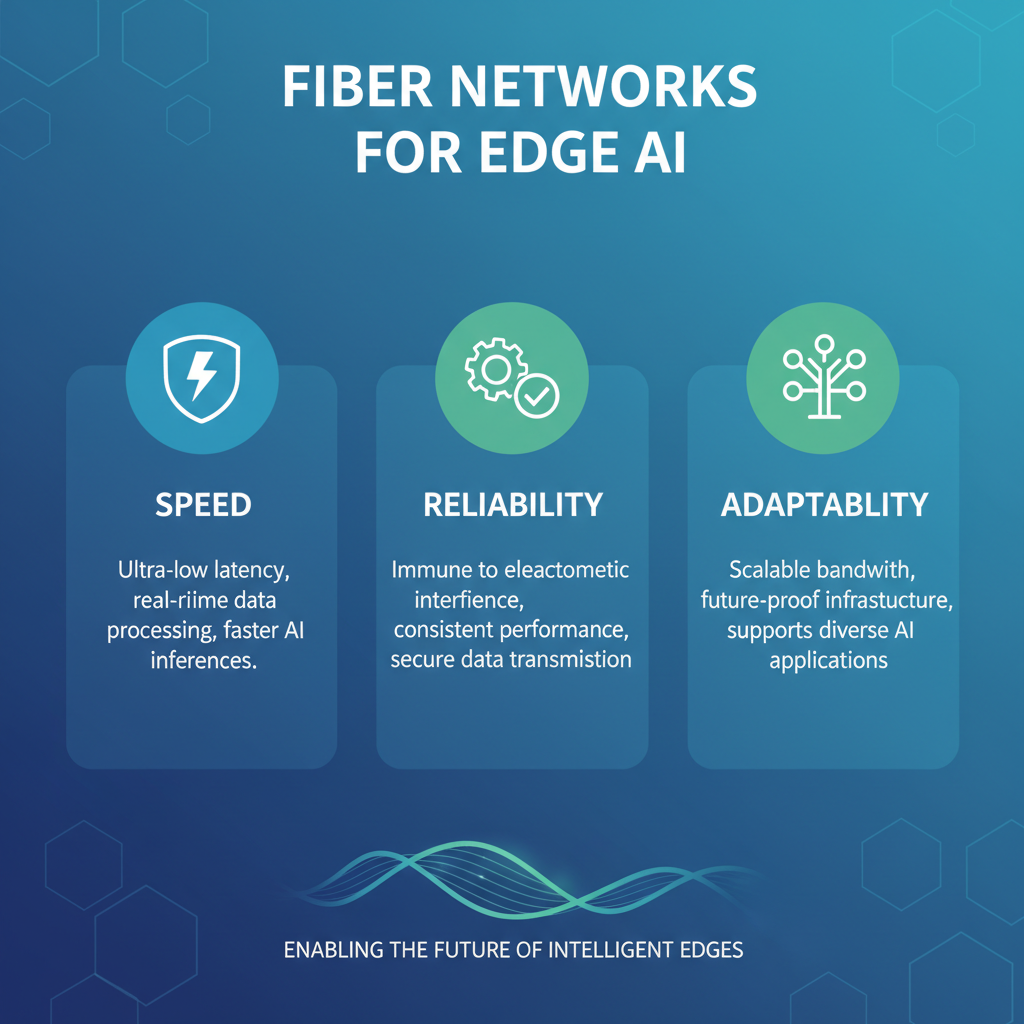
Edge AI represents a fundamental shift in how we process and analyze data, moving computation closer to where information is generated. At the heart of this transformation lies a critical infrastructure component: fiber networks. These high-performance communication backbones enable the speed, reliability, and adaptability that edge AI applications demand.
The relationship between fiber networks and edge AI is symbiotic. While edge computing brings processing power to the network's periphery, fiber infrastructure ensures that data flows seamlessly between edge nodes, central systems, and cloud resources. Without robust fiber connectivity, even the most sophisticated edge AI deployments would struggle to deliver real-time insights.
Speed: The Foundation of Real-Time Processing
Edge AI applications thrive on immediacy. Whether analyzing video feeds for security, processing sensor data in manufacturing, or enabling autonomous vehicle navigation, milliseconds matter. Fiber networks deliver the ultra-low latency and high bandwidth necessary for these time-sensitive operations.
Traditional network infrastructure often introduces bottlenecks that compromise AI performance. Fiber technology eliminates these constraints, supporting the massive data throughput that modern AI models require. This speed advantage becomes particularly crucial when edge devices must communicate with centralized AI training systems or coordinate with other edge nodes.
Reliability: Ensuring Consistent AI Performance
Network configuration plays a pivotal role in maintaining the health and reliability of IT infrastructure. Proper configuration directly impacts communication quality, overall performance, security posture, and scalability potential. For edge AI deployments, reliability isn't just a preference—it's a requirement.
Fiber networks offer inherent advantages in stability and consistency. Unlike wireless alternatives, fiber connections resist electromagnetic interference and environmental factors that can degrade signal quality. This resilience ensures that AI applications receive consistent data streams, preventing the errors and interruptions that could compromise decision-making processes.
The importance of reliable network infrastructure becomes evident when considering global performance challenges. Research indicates that millions of networks worldwide struggle to meet basic requirements for coverage and capacity while managing interference. Edge AI applications cannot afford such vulnerabilities.
Adaptability: Supporting Evolving AI Workloads
The AI landscape evolves rapidly, with new models, frameworks, and use cases emerging constantly. Fiber networks provide the adaptability necessary to support this dynamic environment. Their high capacity allows organizations to scale AI deployments without infrastructure overhauls.
Network configuration encompasses the process of defining and managing operational settings that control how devices communicate. This flexibility proves essential for edge AI, where requirements may shift as applications mature or new capabilities are added. Fiber infrastructure accommodates these changes through software-defined networking and dynamic bandwidth allocation.
Modern edge AI deployments often involve hybrid architectures, blending on-premises processing with cloud resources. Fiber networks seamlessly bridge these environments, enabling organizations to optimize workload placement based on performance, cost, and security considerations. This adaptability ensures that AI investments remain viable as technology and business needs evolve.
The Competitive Advantage of Fiber-Enabled Edge AI
Organizations deploying edge AI on fiber networks gain distinct competitive advantages. Faster response times translate to better customer experiences and operational efficiency. Reliable connectivity reduces downtime and maintenance costs. Adaptable infrastructure supports innovation without requiring constant reinvestment.
As edge AI continues to mature, the gap between fiber-enabled deployments and those relying on legacy infrastructure will only widen. The best networks combine cutting-edge fiber technology with intelligent configuration and management, creating an environment where AI applications can reach their full potential.
Sources
Criteria for Selecting the Best Fiber Networks
Choosing the right fiber network for edge AI applications is a strategic decision that can make or break your deployment. The best networks aren't selected on speed alone—they require a comprehensive evaluation across multiple dimensions to ensure they can handle the unique demands of AI-driven workloads.
When evaluating potential fiber network solutions, organizations must consider several critical factors that directly impact performance, reliability, and long-term value.
Speed and Latency Performance
For edge AI applications, network speed is non-negotiable. Your fiber infrastructure must deliver ultra-low latency to support real-time data processing and decision-making. Look for networks that can consistently maintain high throughput even during peak demand periods, ensuring your AI models receive and transmit data without bottlenecks.
The difference between milliseconds can be critical in applications like autonomous systems, predictive maintenance, or real-time analytics. Evaluate network providers based on their guaranteed minimum speeds and their track record of maintaining those commitments.
Reliability and Uptime Guarantees
Edge AI deployments often support mission-critical operations where downtime translates directly to lost revenue or compromised safety. Assess the network's historical uptime statistics and the redundancy measures built into their infrastructure.
The best networks incorporate multiple failover pathways and geographic redundancy to ensure continuous operation. Review service-level agreements carefully, paying particular attention to uptime guarantees and the compensation structure for any service interruptions.
Scalability and Adaptability
Your fiber network must grow with your AI ambitions. As your edge deployments expand and your data volumes increase, the infrastructure should scale seamlessly without requiring complete overhauls.
Consider how easily the network can accommodate additional endpoints, handle increased bandwidth demands, and integrate with emerging technologies. Networks that offer flexible capacity adjustments and modular expansion options provide the adaptability needed in the rapidly evolving AI landscape.
Coverage and Geographic Reach
The physical reach of your fiber network determines where you can deploy edge AI solutions. Evaluate whether the network's coverage aligns with your current and planned deployment locations.
For organizations with distributed operations, networks offering broad geographic coverage or strong partnerships with regional providers ensure consistent performance across all sites. This becomes particularly important when coordinating edge nodes that must communicate with centralized cloud resources.
Cost Efficiency and Pricing Structures
While performance is paramount, cost-effectiveness ensures sustainable operations. Analyze the total cost of ownership, including installation fees, monthly service charges, bandwidth overage costs, and any hidden fees.
Organizations with high-volume needs should explore subscription packages or retainer arrangements that can provide better value than pay-per-use models. The right pricing structure aligns with your usage patterns and provides predictable budgeting.
Technology Features and Integration Capabilities
Modern fiber networks should offer more than just connectivity. Look for value-added features such as built-in security protocols, quality-of-service controls, and monitoring dashboards that provide visibility into network performance.
Integration capabilities with existing infrastructure and compatibility with your AI frameworks are equally important. Networks that support standard protocols and offer robust APIs simplify deployment and reduce technical friction.
Compliance and Security Standards
Edge AI applications often process sensitive data, making security and compliance critical selection criteria. Verify that potential network providers meet industry-specific regulatory requirements and maintain certifications relevant to your sector.
Evaluate the security measures embedded in the network infrastructure, including encryption standards, access controls, and threat detection capabilities. The best networks treat security as a foundational element rather than an afterthought.
Sources
Top Fiber Networks for Edge AI in 2023
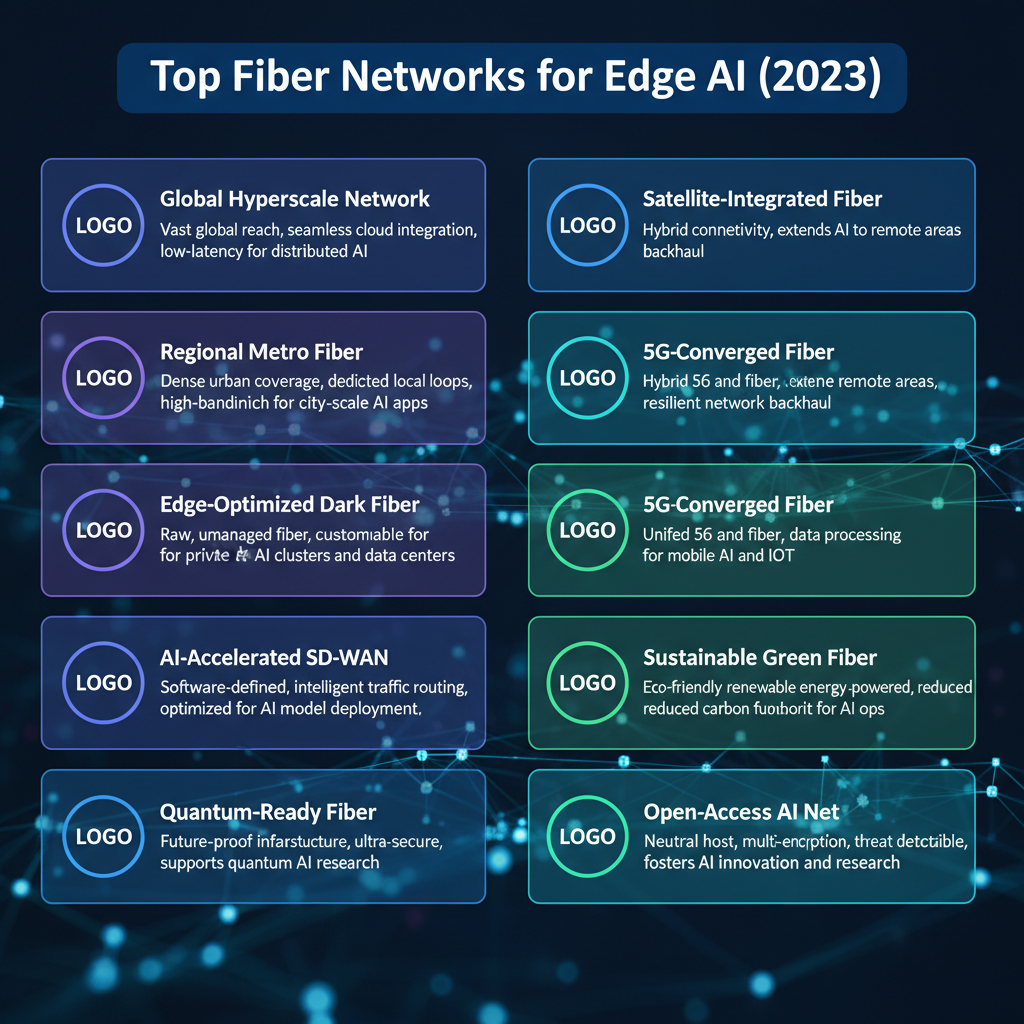
Selecting the right fiber network infrastructure for edge AI applications requires careful consideration of performance, scalability, and reliability. While the landscape continues to evolve rapidly, organizations must evaluate solutions based on their specific deployment requirements and long-term strategic goals.
The fiber network ecosystem has matured significantly, with adoption growing across industries. Organizations are increasingly recognizing that robust network infrastructure forms the foundation for successful edge AI implementations. The right choice can mean the difference between seamless real-time processing and frustrating bottlenecks that limit AI potential.
Key Characteristics of Leading Solutions
When evaluating fiber network options for edge AI deployments, several core attributes distinguish top-tier providers from the rest. High-bandwidth capacity remains essential, as edge AI applications often process massive data streams in real time. Low-latency performance ensures that AI models can make split-second decisions without delay.
Scalability is equally critical. As AI workloads grow and evolve, your network infrastructure must accommodate increasing demands without requiring complete overhauls. The best networks offer flexible architectures that scale horizontally and vertically as your edge AI ecosystem expands.
Reliability and redundancy cannot be overlooked. Edge AI applications often support mission-critical operations where downtime translates directly to lost revenue or compromised safety. Leading fiber networks incorporate built-in failover mechanisms and redundant pathways to ensure continuous operation.
Enterprise-Grade Infrastructure Providers
Several providers have established themselves as leaders in delivering fiber network solutions optimized for demanding AI workloads. These organizations combine extensive infrastructure footprints with advanced management capabilities and proven track records in supporting complex deployments.
Enterprise-focused providers typically offer dedicated fiber connections with guaranteed service level agreements. These solutions prioritize consistent performance and provide direct access to technical support teams with deep expertise in AI application requirements. For organizations with stringent compliance requirements, these providers often maintain certifications across multiple regulatory frameworks.
Regional and Specialized Network Options
Beyond the major enterprise providers, regional carriers and specialized network operators serve important niches within the fiber network landscape. These providers often deliver competitive pricing and personalized service that larger organizations cannot match.
Regional providers frequently maintain deep relationships within their service areas, offering localized expertise and rapid response times. For edge AI deployments concentrated in specific geographic regions, these networks can provide excellent value while meeting technical requirements.
Specialized network operators focus on particular industry verticals or use cases. Some concentrate on ultra-low-latency applications, while others optimize for high-throughput data transfer. Matching your edge AI requirements to a provider's specialization can yield significant performance advantages.
Emerging Technologies and Innovation Leaders
The fiber network industry continues to innovate, with several providers pushing the boundaries of what's possible. These organizations invest heavily in research and development, deploying cutting-edge technologies that will define the next generation of network infrastructure.
Innovation-focused providers often implement advanced optical technologies that increase bandwidth capacity without requiring new fiber installation. They leverage software-defined networking capabilities to provide unprecedented flexibility and control over network resources.
Some providers are pioneering integration between fiber networks and edge computing platforms, creating tightly coupled solutions that optimize the entire AI processing pipeline. These integrated approaches reduce complexity and can significantly improve overall system performance.
Hybrid and Multi-Cloud Network Solutions
As organizations embrace hybrid and multi-cloud strategies, fiber network providers have responded with solutions designed to seamlessly connect diverse infrastructure environments. These networks facilitate smooth data flow between on-premises edge AI deployments and cloud-based resources.
Hybrid network solutions provide the flexibility to distribute AI workloads across the most appropriate locations. Preprocessing might occur at the edge, while more intensive training operations leverage cloud resources. Leading providers ensure that data moves efficiently between these environments without introducing latency or bandwidth constraints.
Multi-cloud connectivity enables organizations to avoid vendor lock-in while leveraging best-of-breed services from multiple cloud platforms. The best networks support direct connections to major cloud providers, reducing reliance on public internet pathways that can introduce unpredictability.
Cost-Effective Options for Growing Organizations
Not every organization requires enterprise-grade fiber infrastructure from day one. Several providers offer cost-effective solutions tailored to growing businesses and startups exploring edge AI capabilities. These options balance affordability with adequate performance for initial deployments.
Cost-conscious providers often utilize shared infrastructure models that distribute expenses across multiple customers. While this approach may involve some trade-offs in terms of guaranteed bandwidth or dedicated support, it provides an accessible entry point for organizations testing edge AI concepts.
As your edge AI initiatives mature and prove their value, many of these providers offer clear upgrade paths to more robust solutions. This scalability ensures that your initial network investment remains relevant as requirements evolve.
Geographic Coverage and Global Reach
For organizations with distributed edge AI deployments, geographic coverage becomes a critical selection criterion. Providers with extensive fiber footprints can support consistent performance across multiple locations, simplifying management and ensuring uniform user experiences.
Global network providers maintain points of presence in major markets worldwide, enabling edge AI deployments that span continents. These networks typically interconnect through strategic peering relationships, ensuring efficient data routing regardless of source and destination.
Regional coverage depth matters as much as geographic breadth. Providers with dense metro fiber networks can support edge AI deployments closer to end users, reducing latency and improving responsiveness for location-sensitive applications.
Security and Compliance Considerations
Security capabilities vary significantly across fiber network providers. The best networks for edge AI incorporate multiple layers of protection, from physical security at fiber access points to encryption of data in transit. These measures protect sensitive AI model data and the valuable insights generated by edge processing.
Compliance support is essential for organizations in regulated industries. Leading providers maintain certifications for standards such as SOC 2, ISO 27001, and industry-specific frameworks. They provide detailed documentation and audit support to simplify compliance verification processes.
Some providers offer enhanced security features specifically designed for AI workloads, including anomaly detection systems that identify unusual network patterns that might indicate security threats or system malfunctions.
Making Your Selection
Choosing among the best networks for edge AI in 2023 requires aligning provider capabilities with your specific requirements. Begin by clearly defining your performance needs, budget constraints, and growth projections. Evaluate providers against these criteria, requesting detailed technical specifications and references from similar deployments.
Consider conducting proof-of-concept tests with your top candidates. Real-world performance testing reveals how networks handle your actual AI workloads under realistic conditions. Pay attention not just to peak performance, but to consistency and reliability over extended periods.
The fiber network you select will serve as the foundation for your edge AI initiatives. Taking time to make an informed decision based on thorough evaluation will pay dividends through improved application performance, reduced troubleshooting, and greater flexibility as your AI capabilities evolve.
Sources
Case Studies of Successful Implementations
Real-world implementations demonstrate how organizations leverage robust network infrastructure to support AI-driven applications. These examples illustrate the practical benefits of selecting the best networks for edge AI deployments.
Security-First Network Architecture in Practice
One compelling case involves an organization that faced sophisticated security threats while deploying edge AI capabilities. By implementing strict access control lists (ACLs) within their network segmentation strategy, they created a defense-in-depth architecture that proved invaluable during a targeted attack.
When a phishing campaign successfully compromised an initial endpoint, the network's segmentation prevented lateral movement across the infrastructure. The ACLs acted as internal firewalls, containing the breach and protecting critical AI processing nodes. This real-world scenario demonstrates how thoughtful network design supports both performance and security requirements for edge AI applications.
Leveraging Expert Networks for Strategic Implementation
Organizations seeking to optimize their fiber network deployments for edge AI increasingly turn to specialized expertise. Platforms connecting businesses with senior-level professionals provide strategic insights that accelerate successful implementations.
These expert resources typically feature professionals with extensive experience—often 15+ years in senior management roles—who offer unique perspectives on network architecture decisions. Their strategic guidance helps organizations navigate complex choices around fiber infrastructure, ensuring deployments align with both current AI requirements and future scalability needs.
The value of this expertise becomes particularly evident when organizations face critical decisions about network topology, bandwidth allocation, and integration with existing infrastructure. Access to seasoned professionals who have navigated similar challenges can significantly reduce implementation risks and accelerate time-to-value.
Key Takeaways from Successful Deployments
Successful implementations share common characteristics. They prioritize security through network segmentation, invest in expert guidance during planning phases, and design with both immediate needs and future growth in mind. Organizations that take this comprehensive approach to network infrastructure consistently achieve better outcomes for their edge AI initiatives.
Sources
The Future of Fiber Networks in Edge AI
As we look beyond 2023, the landscape of fiber networks supporting edge AI is poised for transformative change. The convergence of emerging technologies and evolving industry demands is reshaping what organizations expect from their network infrastructure. The focus is shifting from raw capacity alone to intelligent, adaptive systems that can anticipate and respond to the dynamic requirements of AI workloads.
One of the most significant trends is the prioritization of agility and precision in network design. Industry observations reveal that organizations now value the speed of accessing the right network capabilities over simply having access to the largest infrastructure. This shift reflects a maturing understanding of edge AI requirements—where milliseconds matter and the quality of connectivity often trumps sheer bandwidth.
Evolution Toward Intelligent Network Architectures
The next generation of fiber networks will likely incorporate AI-driven management systems that optimize routing, predict maintenance needs, and dynamically allocate resources. These intelligent architectures will enable networks to self-configure based on real-time AI application demands, reducing latency and improving reliability without human intervention.
Edge computing nodes will become increasingly distributed, requiring fiber networks that can support thousands of micro-data centers rather than a handful of centralized facilities. This distributed model demands fiber infrastructure with unprecedented flexibility and resilience, capable of maintaining performance even as network topology becomes more complex.
The Role of Emerging Technologies
Several technological advancements are set to redefine fiber network capabilities. Coherent optics technology promises to dramatically increase data transmission rates while reducing power consumption—a critical consideration as edge AI deployments scale. Meanwhile, advances in fiber materials and construction techniques are extending network reach and durability, enabling deployment in previously challenging environments.
Software-defined networking (SDN) principles are being integrated deeper into fiber infrastructure, allowing organizations to programmatically adjust network behavior to match AI workload patterns. This programmability enables the kind of rapid adaptation that modern edge AI applications demand, where processing requirements can fluctuate dramatically based on real-time data inputs.
Sustainability and Efficiency Considerations
As environmental concerns gain prominence, future fiber networks will need to balance performance with energy efficiency. The best networks will incorporate green technologies and design principles that minimize power consumption while maintaining the high-performance standards edge AI requires. This includes innovations in cooling systems, renewable energy integration, and more efficient optical transmission technologies.
The integration of edge AI and fiber networks represents not just a technical evolution but a fundamental shift in how we approach digital infrastructure. Organizations that understand this convergence and invest in forward-looking network solutions will be best positioned to capitalize on the AI innovations that lie ahead.
Sources
Conclusion
As we've explored throughout this guide, selecting the right fiber network for edge AI is far more than a technical decision—it's a strategic investment in your organization's future capabilities. The best networks combine exceptional bandwidth, minimal latency, robust reliability, and the scalability needed to support increasingly sophisticated AI applications at the edge.
The convergence of fiber infrastructure and edge AI represents a pivotal moment in technological evolution. Organizations that choose wisely today position themselves to harness the full potential of AI-driven innovations tomorrow. Whether you're deploying real-time analytics, autonomous systems, or advanced machine learning models, your fiber network serves as the critical foundation that determines success or limitation.
The Path Forward
Looking ahead, the role of fiber networks in enabling edge AI will only grow more crucial. As AI applications become more demanding and edge computing continues to expand, the networks supporting these technologies must evolve in tandem. The investments you make now in selecting and implementing the best networks will pay dividends for years to come.
Having spent years exploring the intricacies of fiber networks and their role in supporting cutting-edge technologies, I've witnessed firsthand how the right infrastructure transforms possibilities into realities. The best networks aren't just about speed—they're about adaptability, resilience, and the capacity to support both current operations and future innovations.
As you evaluate your options and plan your edge AI strategy, remember that the fiber network you choose today will shape the innovations you can pursue tomorrow. The landscape of 2023 offers unprecedented opportunities for organizations ready to embrace the convergence of robust fiber infrastructure and intelligent edge computing.