
Network Types for Edge AI: Best Practical Comparison Guide
Discover which network types for edge AI suit your needs. Compare wired vs wireless options with expert insights on performance and deployment.
 Brian Foster
Introduction
Key Takeaways
- Edge AI deployments require careful consideration of network types to balance reliability, latency, and flexibility
- Wired networks offer robust connections and minimal latency, while wireless networks provide mobility and ease of installation
- The choice between wired and wireless isn't universal—it depends on your specific application requirements and deployment environment
- Hybrid approaches can leverage the strengths of both network types for optimal edge AI performance
- Understanding the trade-offs helps you make informed decisions that align with your project's unique needs
I recall a project a few years back where we were tasked with setting up an AI-driven data processing unit at the network's edge. The stakes were high: edge AI applications demand reliable, low-latency connections to process data in real-time, yet they also need the flexibility to adapt to changing environments and the scalability to grow with business needs.
Initially, the reliability and high bandwidth of a wired network were appealing. The promise of minimal latency and robust connections seemed ideal for the heavy data loads AI applications often demand. However, the project's unique requirements for flexibility and scalability drew our attention to wireless options. Deploying a wireless setup provided the mobility and ease of installation we needed, especially in remote locations where laying cables was impractical.
This experience taught me that the decision between wired and wireless isn't just about comparing technical specifications on paper. It's about understanding the specific needs of your AI application, the constraints of your deployment environment, and the long-term goals of your project.
What This Guide Covers
In this comprehensive comparison, we'll explore the practical realities of both wired and wireless network types for edge AI deployments. You'll discover how each approach performs across critical dimensions like latency, bandwidth, and reliability. We'll examine real-world cost considerations, from initial installation through ongoing maintenance and scaling. Security implications, hybrid strategies, and a practical decision framework will help you navigate this critical choice with confidence.
Whether you're deploying AI at the edge of a manufacturing facility, in remote monitoring stations, or across distributed retail locations, understanding these network types will empower you to make the right choice for your specific situation.
Discover which network types for edge AI suit your needs. Compare wired vs wireless options with expert insights on performance and deployment.
Focus keyword: network typesTone: professional
Table of Contents
- Introduction — Open with Brian's personal experience deploying an AI-driven data processing unit where the wired vs wireless decision became critical. Establish the stakes: edge AI demands reliable, low-latency networks, but flexibility and scalability matter too. Preview that this article will compare wired and wireless network types for edge AI, helping readers make informed decisions based on their specific deployment needs.
- Table of Contents — Auto-generated table of contents linking to all H2 sections below.
- Understanding Edge AI Network Requirements — Define what edge AI is and why network choice matters. Cover the fundamental requirements: bandwidth for data-intensive processing, latency sensitivity for real-time decisions, reliability for mission-critical applications, and scalability for growing deployments. Explain how edge AI differs from cloud AI in terms of network demands. Set the foundation for comparing network types.
- Wired Network Advantages for Edge AI — Deep dive into wired network benefits: consistent high bandwidth, minimal latency (especially fiber optics), superior reliability and stability, enhanced security through physical isolation, and predictable performance. Draw on Brian's fiber optic network expertise to explain why wired connections excel for heavy data loads. Discuss scenarios where wired is the clear winner: data centers, industrial facilities, and permanent installations.
- Wireless Network Advantages for Edge AI — Explore wireless network benefits: deployment flexibility, mobility for remote locations, easier scalability, lower installation costs, and rapid deployment capabilities. Reference Brian's project experience where wireless provided the mobility needed in remote locations. Cover modern wireless technologies (5G, Wi-Fi 6) that make wireless viable for edge AI. Identify ideal use cases: mobile applications, temporary deployments, and hard-to-wire locations.
- Performance Comparison: Latency, Bandwidth, and Reliability — Provide objective performance metrics comparing wired vs wireless. Create a detailed comparison of latency ranges, bandwidth capabilities, packet loss rates, and uptime statistics for both network types. Include real-world performance scenarios for edge AI applications. Explain how environmental factors affect each type differently. Help readers understand the performance trade-offs quantitatively.
- Cost Analysis: Installation, Maintenance, and Scaling — Break down total cost of ownership for both network types. Compare initial infrastructure costs, installation labor and time, ongoing maintenance expenses, and scaling costs as deployments grow. Discuss hidden costs (trenching for wired, spectrum licensing for wireless). Provide framework for calculating ROI based on deployment size and timeline. Help readers budget appropriately for their edge AI network.
- Security Considerations for Network Types for Edge AI — Examine security implications of each network type. Discuss physical security advantages of wired networks, encryption requirements for wireless, vulnerability to interference and interception, and best practices for securing both types. Cover compliance considerations for regulated industries. Draw on Brian's security service expertise to provide practical security recommendations for edge AI deployments.
- Hybrid Approaches: Combining Wired and Wireless — Introduce hybrid network architectures that leverage both types. Explain common hybrid patterns: wired backbone with wireless edge connections, failover configurations, and segmented networks by function. Discuss how to design hybrid systems that maximize benefits of both types. Share strategies for seamless integration and management of mixed network environments for edge AI.
- Decision Framework: Choosing the Right Network Type — Provide actionable decision framework readers can apply. Create a checklist of factors to evaluate: application latency requirements, deployment environment, budget constraints, scalability needs, security requirements, and timeline. Offer decision tree or flowchart logic to guide network type selection. Emphasize Brian's lesson that the choice depends on specific AI application needs, not universal rules.
- Conclusion — Reinforce that there's no one-size-fits-all answer for network types in edge AI. Summarize key comparison points: wired excels in performance and reliability, wireless wins on flexibility and deployment speed, hybrid offers balanced solutions. Encourage readers to assess their specific requirements using the decision framework. Close with Brian's perspective on maintaining adaptability as technology evolves, ensuring readers can leverage the best of both worlds.
11 sections
Understanding Edge AI Network Requirements
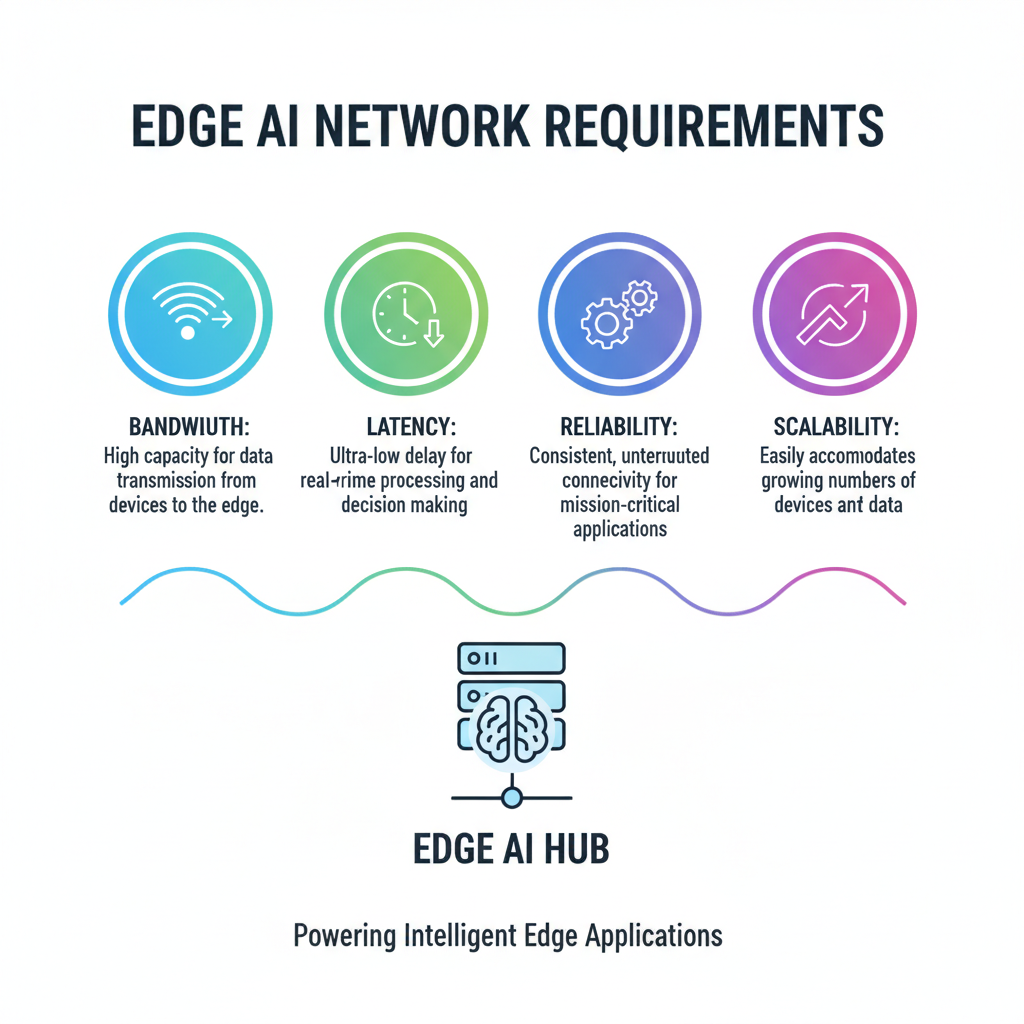
Edge AI represents a fundamental shift in how artificial intelligence processes data. Instead of sending information to centralized cloud servers, edge AI performs computations directly on devices at the network's edge—closer to where data originates. This approach reduces the round-trip time to distant data centers and enables real-time decision-making in environments ranging from manufacturing floors to autonomous vehicles.
The network infrastructure supporting edge AI faces unique demands that differ significantly from traditional cloud-based AI systems. When processing happens at the edge, your network becomes the critical backbone determining whether your AI applications succeed or fail.
Bandwidth Requirements for Data-Intensive Processing
Edge AI applications often handle substantial data volumes, especially when processing video streams, sensor arrays, or high-resolution imaging. While edge computing reduces the need to transmit all raw data to the cloud, the local network still must support high-bandwidth connections between edge devices, local processing units, and any necessary data storage systems.
Modern networks must accommodate these high bandwidth demands while maintaining consistent performance. Video analytics applications, for instance, may require continuous streams of high-definition footage flowing from multiple cameras to local AI processors. Industrial IoT deployments might aggregate data from hundreds of sensors simultaneously.
Latency Sensitivity for Real-Time Decisions
Latency—the time delay in data transmission—becomes critical when AI systems make split-second decisions. Autonomous systems, medical monitoring devices, and industrial safety applications cannot tolerate the delays inherent in cloud-based processing. Edge AI addresses this by processing locally, but the network connecting edge components must introduce minimal additional latency.
Even milliseconds matter in applications like collision avoidance systems or real-time quality control. Your network architecture directly impacts whether your edge AI can respond quickly enough to be effective.
Reliability for Mission-Critical Applications
Many edge AI deployments support mission-critical operations where network failures have serious consequences. Manufacturing lines, healthcare monitoring, and security systems require networks that maintain consistent uptime and gracefully handle any disruptions.
Reliability encompasses both the network's ability to maintain connections and its capacity to handle varying loads without degradation. Modern networks require robust architectures that support dynamic scalability and interoperability across different system components.
Scalability for Growing Deployments
Edge AI implementations rarely remain static. As organizations expand their deployments—adding more sensors, cameras, or processing nodes—the underlying network must scale accordingly. This scalability requirement affects both the physical infrastructure and the network's ability to manage increased traffic without performance bottlenecks.
Successful edge AI networks support growth without requiring complete infrastructure overhauls. They accommodate new devices, handle increased data volumes, and maintain performance as deployments expand from pilot projects to enterprise-wide implementations.
How Edge AI Differs from Cloud AI in Network Demands
Cloud AI centralizes processing in large data centers with robust, redundant network infrastructure. Edge AI distributes processing across numerous locations, each with its own network requirements. This distribution creates different challenges:
Cloud AI prioritizes the connection between end devices and data centers, often tolerating higher latency in exchange for massive computational power. Edge AI requires local networks that support real-time processing while maintaining selective connectivity to cloud resources for model updates, aggregated analytics, or backup processing.
The network types you choose for edge AI must balance local performance requirements with the flexibility to integrate with broader systems. Understanding these fundamental requirements sets the foundation for evaluating whether wired, wireless, or hybrid network approaches best serve your specific edge AI deployment needs.
Sources
Wired Network Advantages for Edge AI
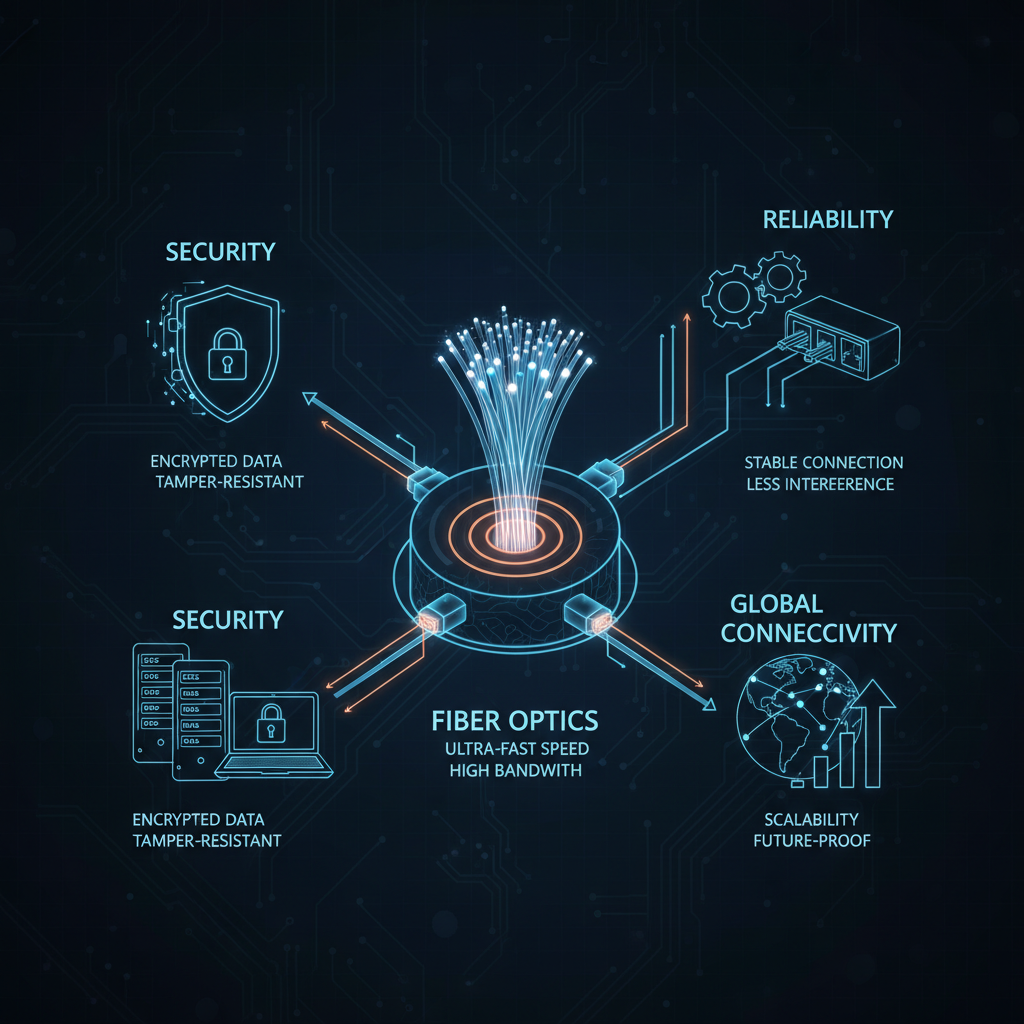
When it comes to deploying edge AI in environments where performance is non-negotiable, wired networks consistently deliver the reliability and speed that mission-critical applications demand. The physical connection inherent to wired infrastructure eliminates many of the variables that can compromise wireless performance, making it the foundation of choice for high-stakes deployments.
Consistent High Bandwidth for Data-Intensive Processing
Wired connections provide the bandwidth headroom edge AI applications need to process large volumes of data without bottlenecks. Fiber optic cables, in particular, can transmit data at speeds up to 100Gbps, vastly outpacing the capabilities of traditional copper alternatives. This exceptional throughput ensures that AI models can ingest sensor data, video streams, and telemetry information in real-time without degradation.
For edge AI deployments handling heavy data loads—such as computer vision systems analyzing multiple high-resolution camera feeds—this consistent bandwidth becomes essential. The predictable performance of wired infrastructure means you can accurately forecast capacity and avoid the unpredictable congestion that can plague wireless environments.
Minimal Latency Through Physical Connections
Latency is the enemy of real-time AI decision-making, and wired networks excel at minimizing delay. The direct physical path of a wired connection reduces the number of hops and eliminates the signal processing overhead inherent in wireless transmission. This translates to response times measured in microseconds rather than milliseconds.
In my experience with fiber optic networks, the speed of light transmission through glass fiber creates a latency advantage that's difficult to match. For edge AI applications making split-second decisions—like autonomous manufacturing equipment or safety-critical monitoring systems—this minimal delay can be the difference between success and failure.
Superior Reliability and Stability
Wired networks offer a level of stability that wireless simply cannot match. Physical cables are immune to radio frequency interference, weather conditions, and the signal degradation that affects wireless transmissions over distance. This reliability translates directly to uptime for edge AI systems.
- Predictable performance: Wired connections maintain consistent speeds regardless of environmental factors
- Reduced packet loss: Physical connections experience significantly lower data loss rates
- Minimal jitter: Timing variations remain negligible, critical for synchronized AI operations
- Interference immunity: No competition for spectrum or signal degradation from obstacles
For industrial facilities and data centers where edge AI must operate 24/7 without interruption, this reliability becomes a fundamental requirement rather than a luxury.
Enhanced Security Through Physical Isolation
Security takes on a different dimension with wired networks. The physical nature of the connection means that unauthorized access requires direct physical proximity and cable tapping—a far higher barrier than intercepting wireless signals. For edge AI deployments handling sensitive data or controlling critical infrastructure, this physical security layer provides peace of mind.
Wired networks also simplify network segmentation and access control. You can create physically isolated network zones for different AI workloads, ensuring that a compromise in one area doesn't cascade across your entire deployment. This isolation is particularly valuable in environments where regulatory compliance demands strict data handling protocols.
Ideal Deployment Scenarios for Wired Edge AI
Wired networks emerge as the clear winner in several key scenarios:
Data Centers and Server Rooms: Where edge AI processing occurs alongside traditional computing infrastructure, wired connections provide the backbone for high-performance distributed AI workloads. The controlled environment makes cable installation straightforward, and the permanent nature of the installation justifies the infrastructure investment.
Industrial Facilities: Manufacturing plants, refineries, and production lines benefit from wired networks' reliability and deterministic performance. When edge AI controls robotic systems or monitors safety-critical processes, the stability of wired connections eliminates risk factors that could lead to costly downtime or safety incidents.
Permanent Installations: Any edge AI deployment designed for long-term operation in a fixed location should seriously consider wired infrastructure. The upfront installation cost is offset by decades of reliable service with minimal maintenance requirements. Buildings, campuses, and established facilities already have conduit infrastructure that makes wired deployment practical.
High-Security Environments: Government facilities, financial institutions, and healthcare settings where data security cannot be compromised find wired networks essential. The physical security and reduced attack surface align with stringent compliance requirements.
The decision to deploy wired infrastructure for edge AI isn't just about raw performance—it's about creating a foundation that will support your AI applications reliably for years to come. When the environment allows for it and performance requirements demand it, wired networks provide the predictable, high-performance foundation that edge AI deployments need to succeed.
Sources
Wireless Network Advantages for Edge AI

Wireless networks bring a unique set of advantages to edge AI deployments, particularly when flexibility and rapid deployment are priorities. Using radio waves for communication, wireless solutions allow devices to connect while roaming within network coverage areas, making them ideal for scenarios where mobility is essential.
I've seen firsthand how wireless setups can transform edge AI projects. On one deployment, we needed to establish an AI-driven data processing unit in a remote location where laying cables simply wasn't practical. The wireless approach provided the mobility and ease of installation we needed, proving that sometimes flexibility trumps raw performance metrics.
Deployment Flexibility and Mobility
Wireless networks excel in environments where physical cabling is challenging or impossible. Remote monitoring stations, mobile edge AI applications, and temporary installations all benefit from the freedom wireless connectivity provides. You can position devices based on operational needs rather than infrastructure constraints.
This mobility advantage extends beyond initial deployment. As your edge AI requirements evolve, wireless networks allow you to reposition sensors, cameras, and processing units without the hassle of rewiring. For applications that require frequent reconfiguration or seasonal adjustments, this flexibility translates directly into operational efficiency.
Modern Wireless Technologies for Edge AI
Recent advances in wireless technology have made these networks increasingly viable for demanding edge AI workloads. Technologies like 5G and Wi-Fi 6 deliver significantly improved bandwidth, lower latency, and better handling of multiple simultaneous connections compared to earlier generations.
These modern standards support the data-intensive nature of many edge AI applications while maintaining the inherent flexibility of wireless communication. The key is understanding your specific performance requirements and matching them to the appropriate wireless technology.
Cost and Speed Advantages
Wireless networks typically offer lower installation costs than their wired counterparts. There's no need for extensive cable runs, conduit installation, or the labor-intensive work of threading connections through existing structures. This cost advantage becomes even more pronounced in retrofit scenarios or large-area deployments.
Rapid deployment is another significant benefit. A wireless network can often be operational in days rather than weeks, allowing you to bring edge AI capabilities online quickly. For pilot projects, proof-of-concept deployments, or time-sensitive applications, this speed can be a decisive factor.
Ideal Use Cases for Wireless Edge AI
Certain scenarios naturally favor wireless network types. Mobile applications—such as autonomous vehicles, robotic systems, or portable diagnostic equipment—require the freedom that only wireless can provide. Temporary deployments for events, construction sites, or seasonal operations benefit from easy setup and teardown.
Hard-to-wire locations also make strong candidates for wireless solutions. Historic buildings where drilling is restricted, outdoor environments spanning large areas, or facilities with physical barriers all present challenges that wireless networks handle elegantly. The foundation of success in these scenarios starts with proper network design, which serves as a blueprint for ensuring reliable coverage and performance.
Scalability Considerations
Adding new devices to a wireless network is typically simpler than expanding wired infrastructure. Once your wireless coverage is established, onboarding additional edge AI nodes often requires minimal additional investment. This scalability makes wireless networks attractive for deployments expected to grow over time.
However, remember that wireless spectrum is a shared resource. As you add more devices, you'll need to manage bandwidth allocation and potential interference carefully to maintain performance across your edge AI ecosystem.
Sources
Performance Comparison: Latency, Bandwidth, and Reliability
When evaluating network types for edge AI deployments, performance metrics tell the real story. Understanding how wired and wireless networks differ in latency, bandwidth, and reliability helps you make informed decisions that align with your application's demands.
Latency: The Speed of Response
Latency measures the time it takes for data to travel from source to destination. For edge AI applications requiring real-time processing—think autonomous vehicles or industrial automation—every millisecond counts.
Wired networks typically deliver latency in the range of 1-5 milliseconds for local connections. Fiber optic cables, which I've worked with extensively, offer the lowest latency due to light-speed data transmission. This consistency makes wired connections ideal for applications where predictable response times are non-negotiable.
Wireless networks operate with higher latency ranges. Traditional Wi-Fi connections average 10-30 milliseconds, though newer Wi-Fi 6 technology has narrowed this gap. 5G networks promise latency as low as 1-10 milliseconds under optimal conditions, but real-world performance varies based on signal strength, interference, and network congestion.
Bandwidth Capabilities: Data Throughput Potential
Bandwidth determines how much data your network can handle simultaneously. Edge AI applications processing video streams, sensor arrays, or large datasets need substantial throughput.
Fiber optic cables demonstrate impressive transmission capabilities, supporting speeds up to 100Gbps in modern deployments. Even standard twisted pair cables can transmit up to 10Gbps, providing ample headroom for most edge AI workloads. Network design directly affects data throughput, making the choice of network architecture critical for performance.
Wireless networks have made remarkable strides. Wi-Fi 6 supports theoretical speeds up to 9.6Gbps, while 5G networks can deliver 1-10Gbps under ideal conditions. However, these maximum speeds are shared among all connected devices and degrade with distance from access points or cell towers.
Reliability and Uptime: Consistency Under Pressure
Reliability measures how consistently your network performs without interruption. For mission-critical edge AI applications, downtime isn't just inconvenient—it can be costly or dangerous.
Wired networks excel in reliability. Once installed, they're largely immune to environmental interference. Physical cables maintain consistent performance regardless of weather, electromagnetic interference, or nearby wireless signals. Uptime statistics for properly maintained wired networks typically exceed 99.9%.
Wireless networks face more variables. Physical obstacles like walls, metal structures, or terrain can block signals. Weather conditions—particularly heavy rain or snow—can degrade performance. Electromagnetic interference from other devices creates additional challenges. While modern wireless protocols include error correction and adaptive transmission, these factors make wireless networks inherently less predictable than wired alternatives.
Environmental Factors: Real-World Performance Scenarios
Environmental conditions affect each network type differently, and understanding these impacts helps you anticipate performance in your specific deployment context.
For wired networks, the primary environmental concern is physical damage. Rodents chewing cables, construction accidents, or natural disasters can sever connections. Temperature extremes rarely affect fiber optics, though copper cables can experience minor performance degradation in extreme heat.
Wireless networks contend with dynamic environmental challenges. In industrial settings, metal machinery and electrical equipment create interference zones. In outdoor deployments, foliage growth can block line-of-sight paths. Urban environments present dense wireless traffic that creates congestion. These factors mean wireless performance can vary significantly hour-to-hour or season-to-season.
Packet Loss and Error Rates
Packet loss—when data packets fail to reach their destination—directly impacts AI model accuracy and system responsiveness.
Wired networks typically maintain packet loss rates below 0.1% under normal conditions. The physical connection ensures data integrity, and any errors are usually symptoms of hardware failure rather than transmission issues.
Wireless networks experience higher packet loss rates, typically 1-5% depending on signal quality and interference. Modern protocols include robust error correction, but retransmitting lost packets adds latency. For edge AI applications processing continuous data streams, this variability can complicate model training and inference.
Practical Performance Trade-offs
The performance comparison isn't about declaring a winner—it's about matching network characteristics to application requirements.
If your edge AI deployment processes high-resolution video for quality control in a fixed location, wired networks deliver the consistent low-latency, high-bandwidth performance you need. The predictable performance eliminates variables that could affect AI accuracy.
If you're deploying mobile edge AI for agricultural monitoring across vast fields, wireless networks provide the only practical option. While you'll accept higher latency and occasional connectivity gaps, the deployment flexibility outweighs these limitations.
Many successful deployments use hybrid approaches—wired backbones for critical data paths with wireless extensions for flexibility. Understanding these performance metrics helps you design networks that optimize for your specific edge AI requirements.
Sources
Cost Analysis: Installation, Maintenance, and Scaling
Understanding the total cost of ownership for edge AI network infrastructure requires looking beyond initial hardware prices. Both wired and wireless network types carry distinct cost profiles across installation, maintenance, and scaling phases that can significantly impact your budget over time.
Initial Infrastructure Investment
Wired networks typically demand higher upfront costs. Cable infrastructure, network switches, and installation labor create substantial initial expenses. The physical installation process often requires professional contractors, especially when running cables through walls, ceilings, or underground conduits.
Wireless networks generally offer lower entry costs. Access points and wireless controllers represent the primary hardware investments, with installation requiring less specialized labor. However, enterprise-grade wireless equipment designed for edge AI workloads can narrow this cost gap considerably.
Hidden Installation Costs
Trenching and conduit work represent major hidden expenses for wired deployments. Running fiber optic cables across facilities or between buildings may require excavation, permits, and restoration work that can multiply initial budget estimates. Building codes and environmental regulations add further complexity and cost.
Wireless deployments face different hidden costs. Spectrum licensing fees apply in certain frequency bands, particularly for private networks operating in licensed spectrum. Site surveys, RF planning, and interference mitigation studies add professional service costs that organizations often overlook during initial budgeting.
Ongoing Maintenance Expenses
Wired networks benefit from lower ongoing maintenance costs once installed. Physical cables rarely require replacement unless damaged, and switches typically operate reliably for years with minimal intervention. Maintenance primarily involves monitoring, occasional firmware updates, and replacing failed components.
Wireless networks demand more active maintenance. Access points require regular firmware updates to address security vulnerabilities and performance improvements. Environmental changes—new walls, equipment, or interference sources—may necessitate reconfiguration or additional hardware to maintain coverage and performance.
Scaling Costs as Deployments Grow
Expanding wired networks involves proportional infrastructure costs. Each new connection point requires cable runs, switch ports, and installation labor. Scaling across multiple locations multiplies these expenses linearly, making rapid expansion costly.
Wireless networks offer more flexible scaling economics. Adding devices within existing coverage areas incurs minimal cost beyond the endpoint hardware itself. However, expanding coverage to new areas requires additional access points and potentially backbone infrastructure. Organizations should use scalable architectures like software-defined networking to avoid bottlenecks as deployments grow.
ROI Calculation Framework
Calculating return on investment requires mapping costs against your deployment timeline and scale. For small, static deployments with high reliability requirements, wired networks often deliver better long-term ROI despite higher initial costs. The lower maintenance burden and longer equipment lifespan offset upfront expenses.
For dynamic deployments requiring frequent reconfiguration or rapid scaling, wireless networks may provide superior ROI. The flexibility to relocate devices without rewiring and the ability to scale coverage incrementally reduce total cost of ownership over multi-year horizons.
Consider your deployment's expected lifespan when calculating ROI. Short-term projects favor wireless networks with lower initial investment. Long-term installations spanning five to ten years may justify wired infrastructure's higher upfront costs through reduced ongoing expenses.
Budgeting for Your Edge AI Network
Develop a comprehensive budget that accounts for all cost phases. Include initial hardware and installation, annual maintenance and support contracts, expected scaling requirements over three to five years, and contingency funds for unexpected infrastructure needs.
Factor in opportunity costs when comparing network types. Delayed deployment due to complex wired installation may cost more in lost productivity than the savings from lower hardware prices. Conversely, wireless network performance limitations that reduce AI model accuracy can erode value despite faster deployment.
Sources
Security Considerations for Network Types for Edge AI
Security is a critical factor when selecting network types for edge AI deployments. Each approach—wired or wireless—presents distinct security challenges and advantages that must be carefully evaluated based on your deployment environment and regulatory requirements.
Physical Security Advantages of Wired Networks
Wired networks offer inherent physical security benefits that wireless solutions cannot match. Because data travels through physical cables, unauthorized access requires direct physical connection to the infrastructure. This creates a natural barrier against remote interception attempts.
For edge AI deployments handling sensitive data, wired connections provide controlled access points that can be monitored and protected. Fiber optic networks, in particular, are extremely difficult to tap without detection, as any physical intrusion typically disrupts the light signal. This makes them ideal for high-security environments like financial institutions or healthcare facilities processing patient data at the edge.
However, physical security also means protecting the cables themselves from damage, tampering, or environmental hazards—a consideration that adds complexity to outdoor or distributed deployments.
Encryption and Wireless Security Requirements
Wireless networks transmit data through the air, making them inherently more vulnerable to interception. Any device within range can potentially capture wireless signals, making robust encryption absolutely essential for edge AI applications.
Modern wireless protocols support strong encryption standards like WPA3 for Wi-Fi or TLS for cellular connections. However, implementation matters significantly. Edge AI devices must be configured with proper authentication mechanisms, secure key management, and regular security updates to maintain protection.
Wireless deployments also face risks from rogue access points, man-in-the-middle attacks, and signal jamming. These threats require additional security layers beyond basic encryption, including network segmentation, intrusion detection systems, and continuous monitoring.
Zero Trust Architecture for Network Types
Regardless of whether you choose wired or wireless infrastructure, implementing a Zero Trust Network Architecture provides robust security for edge AI deployments. Zero Trust Network Architecture (ZTNA) is a security model where no device or user is trusted by default, enforcing strict access control and continuous verification.
This approach is particularly valuable for edge AI because it assumes that threats can exist both inside and outside the network perimeter. Every access request is authenticated, authorized, and encrypted, whether it originates from a wired or wireless connection.
For edge deployments, Zero Trust principles mean that even if an attacker gains access to one segment of your network, they cannot freely move laterally to compromise AI processing nodes or data stores.
Vulnerability to Interference and Interception
Wireless networks face unique vulnerabilities that wired connections avoid. Radio frequency interference from nearby devices, physical obstacles, or intentional jamming can disrupt wireless edge AI operations. In industrial environments with heavy machinery or in urban areas with dense wireless traffic, these interference risks multiply.
Wired networks eliminate radio-based interference but remain vulnerable to electromagnetic interference (EMI) in certain environments. Proper cable shielding and routing can mitigate these risks effectively.
From an interception standpoint, wireless signals can be captured from a distance without physical access, while wired network compromise requires either physical cable access or exploitation of network endpoints. This fundamental difference shapes the security controls needed for each approach.
Compliance Considerations for Regulated Industries
Regulated industries face strict requirements around data security and network architecture. Healthcare organizations must comply with HIPAA, financial institutions with PCI-DSS, and many sectors with GDPR or similar privacy regulations.
Wired networks often simplify compliance by providing clear network boundaries and reducing the attack surface. Wireless deployments require additional documentation, security controls, and sometimes architectural changes to meet regulatory standards.
Cloud integration adds another layer of complexity. Ignoring cloud integration challenges can lead to security gaps, as seen in a logistics company that couldn't synchronize security policies across AWS and Azure. For edge AI deployments that connect to cloud services, ensuring consistent security policies across wired, wireless, and cloud segments is essential for maintaining compliance.
Best Practices for Securing Edge AI Networks
Based on practical security service experience, several best practices apply regardless of network type:
Network Segmentation: Isolate edge AI processing nodes from general network traffic. Create separate VLANs or subnets for AI workloads to limit the blast radius of potential breaches.
Regular Security Audits: Conduct periodic vulnerability assessments and penetration testing on both wired and wireless infrastructure. Edge devices often have longer deployment lifecycles, making regular security reviews critical.
Device Authentication: Implement certificate-based authentication for all edge AI devices. Avoid relying solely on passwords, which are easily compromised in both wired and wireless environments.
Encryption at Rest and in Transit: Ensure data is encrypted when stored on edge devices and during transmission across the network, regardless of whether you're using wired or wireless connections.
Monitoring and Logging: Deploy comprehensive logging and real-time monitoring to detect anomalous behavior. Edge AI deployments generate valuable telemetry that can identify security incidents early.
Firmware and Patch Management: Establish processes for regularly updating edge device firmware and network equipment. Many security breaches exploit known vulnerabilities that patches have already addressed.
The security landscape for network types continues to evolve. What worked for yesterday's deployments may not adequately protect tomorrow's edge AI infrastructure. Staying current with security best practices and adapting your approach as threats evolve ensures your edge AI deployments remain protected.
Sources
Hybrid Approaches: Combining Wired and Wireless
In my experience deploying edge AI systems, I've found that the most robust solutions often don't force an either-or choice between wired and wireless networks. Instead, hybrid architectures that strategically combine both types deliver the flexibility and performance modern edge AI deployments demand.
A hybrid approach allows you to leverage the strengths of each network type while mitigating their respective weaknesses. The key is understanding which functions benefit most from wired stability and which require wireless mobility.
Common Hybrid Architecture Patterns
Several proven patterns have emerged for combining wired and wireless networks in edge AI environments.
The wired backbone with wireless edge pattern is perhaps the most common. In this configuration, high-bandwidth fiber optic or Ethernet connections form the core infrastructure, handling heavy data transfers between central processing units and cloud resources. Wireless connections then extend to edge devices and sensors that need mobility or are deployed in locations where cabling is impractical.
This pattern works exceptionally well for manufacturing facilities, where stationary AI processing units connect via wired networks while mobile robots and IoT sensors communicate wirelessly.
Failover configurations provide redundancy by maintaining both wired and wireless connections simultaneously. The system primarily uses the wired network for its superior performance and reliability, but automatically switches to wireless if the wired connection fails. This approach is critical for applications where downtime isn't acceptable, such as healthcare monitoring or industrial safety systems.
Segmented networks by function divide AI workloads based on their specific requirements. Time-sensitive inference tasks might route through dedicated wired connections, while less critical telemetry data flows over wireless networks. This segmentation optimizes resource allocation and prevents lower-priority traffic from impacting critical AI operations.
Designing Effective Hybrid Systems
Successful hybrid networks require thoughtful design to maximize the benefits of both network types.
Start by mapping your edge AI workloads to their network requirements. Identify which processes demand ultra-low latency, which generate the highest data volumes, and which need mobility or flexible deployment. This analysis guides your decisions about which connections should be wired versus wireless.
Consider the physical environment carefully. In outdoor deployments or temporary installations, wireless may be the only practical option for certain nodes. Conversely, permanent indoor installations with predictable data flows often benefit from wired connections.
Plan for scalability from the beginning. Your hybrid architecture should accommodate growth without requiring complete redesign. This might mean over-provisioning wired backbone capacity while keeping wireless networks modular and easily expandable.
Integration and Management Strategies
Managing a mixed network environment presents unique challenges, but the right strategies make integration seamless.
Implement unified network management tools that provide visibility across both wired and wireless segments. Modern network management platforms can monitor performance, detect issues, and optimize traffic routing regardless of connection type. This unified view is essential for troubleshooting and maintaining consistent performance.
Establish clear policies for traffic prioritization and routing. Define which types of AI workloads should prefer wired connections and under what conditions the system should fall back to wireless. Quality of Service (QoS) configurations ensure critical AI operations receive the bandwidth and latency they require.
Standardize security policies across both network types. While the specific implementations differ—physical security for wired, encryption for wireless—your overall security posture should be consistent. This includes authentication protocols, access controls, and monitoring procedures.
Regularly test failover mechanisms to ensure they function as designed. Scheduled drills where you deliberately switch between wired and wireless connections reveal potential issues before they impact production systems.
Optimizing Hybrid Performance
Fine-tuning hybrid networks requires ongoing attention to performance metrics.
Monitor latency, bandwidth utilization, and packet loss across both network segments. Look for patterns that indicate suboptimal routing or capacity constraints. Your monitoring should track not just overall network health, but specifically how AI workloads perform across different connection types.
Implement intelligent load balancing that considers the characteristics of each network type. Some AI tasks may perform acceptably over wireless during normal conditions but should automatically shift to wired connections during peak usage periods.
Consider edge caching and local processing to reduce dependency on constant connectivity. By processing data locally when possible and batching non-urgent uploads, you reduce the burden on both wired and wireless networks.
The beauty of hybrid approaches is their adaptability. As your edge AI deployment evolves, you can adjust the balance between wired and wireless connections without overhauling your entire infrastructure. This flexibility makes hybrid architectures particularly valuable in dynamic environments where requirements change over time.
Decision Framework: Choosing the Right Network Type
Selecting the right network type for your edge AI deployment isn't about following universal rules—it's about matching technology to your specific application needs. Throughout my career in fiber optic and data networks, I've learned that what works brilliantly for one project can fall short for another. The key is systematic evaluation.
Critical Factors to Evaluate
Before committing to wired, wireless, or hybrid infrastructure, assess these core dimensions:
- Application latency requirements — Does your AI model demand sub-10ms response times, or can it tolerate 50–100ms?
- Deployment environment — Are you installing in a controlled facility or across distributed outdoor locations?
- Budget constraints — What's your upfront capital budget versus ongoing operational expenses?
- Scalability needs — Will you add 10 devices or 1,000 over the next two years?
- Security requirements — Are you handling sensitive data that demands physical isolation?
- Timeline — Do you need deployment in weeks or can you plan for months?
Start with a complete asset inventory. Map your device locations, bandwidth requirements, and the impact of potential failures. This groundwork prevents costly mid-project pivots.
Decision Tree Logic
Use this flowchart approach to narrow your options:
- If ultra-low latency is non-negotiable → Lean toward wired (fiber or Ethernet)
- If deployment sites are remote or frequently changing → Wireless becomes practical
- If budget allows and reliability is critical → Wired backbone with wireless extensions (hybrid)
- If rapid deployment matters more than peak performance → Wireless-first with wired upgrades later
- If you're handling highly sensitive data → Wired networks offer stronger physical security
Capacity Planning Checklist
Poorly planned capacity leads to slow speeds and intermittent drops. Before finalizing your network type choice:
- Calculate total bandwidth across all edge devices during peak usage
- Factor in growth projections for the next 12–24 months
- Identify single points of failure and plan redundancy
- Map dependencies between devices and upstream processing nodes
- Test latency requirements under realistic load conditions
Making the Final Call
The decision between wired and wireless network types isn't binary. Most successful edge AI deployments I've worked on use a hybrid approach—leveraging wired infrastructure where performance matters most and wireless where flexibility is paramount. Your specific AI application requirements should drive every choice, not industry trends or vendor preferences.
Remember: the best network architecture is one you can adapt as your edge AI needs evolve.
Sources
Conclusion
Choosing the right network types for edge AI deployments isn't about finding a universal solution—it's about matching technology to your specific requirements. Throughout this guide, we've explored how wired networks excel in performance and reliability, delivering the low latency and high bandwidth that demanding AI applications require. Wireless networks, on the other hand, offer unmatched flexibility and deployment speed, making them ideal for remote locations or rapidly changing environments.
Hybrid approaches provide a balanced middle ground, allowing you to leverage the strengths of both network types where it makes the most sense. The decision framework we've outlined gives you a practical tool to evaluate your application's latency needs, deployment environment, budget constraints, scalability requirements, and security considerations.
In my experience navigating wired versus wireless AI networks, I've learned that maintaining an adaptable approach is crucial. What works perfectly for one edge AI deployment might not suit another at all. The key is understanding your specific application needs rather than following universal rules.
As technology continues to evolve, the lines between wired and wireless capabilities will blur further. New standards will emerge, performance gaps will narrow, and hybrid solutions will become increasingly sophisticated. By regularly reassessing your network choices and staying informed about emerging options, you can ensure your edge AI infrastructure remains optimized for both current demands and future growth.
The best network type for your edge AI deployment is the one that aligns with your unique operational requirements, budget realities, and strategic goals. Use the framework provided here as your starting point, but don't hesitate to adapt it as your needs evolve.